Millner Property Market 2026
Millner Property Market 2026
Millner remains one of Darwin’s established northern suburbs to watch in 2026, with public suburb data showing house prices around the mid-$600,000 range and median house rent around $650–$670 per week. Your Investment Property reports Millner’s median house price at $640,000 with 19.63% annual capital growth and 34 house sales over the past 12 months, while Realestate.com.au reports Millner house rents around $670 per week and strong rental demand. Darwin’s rental market is also extremely tight, with SQM Research reporting vacancy fell to 0.4% in March 2026.
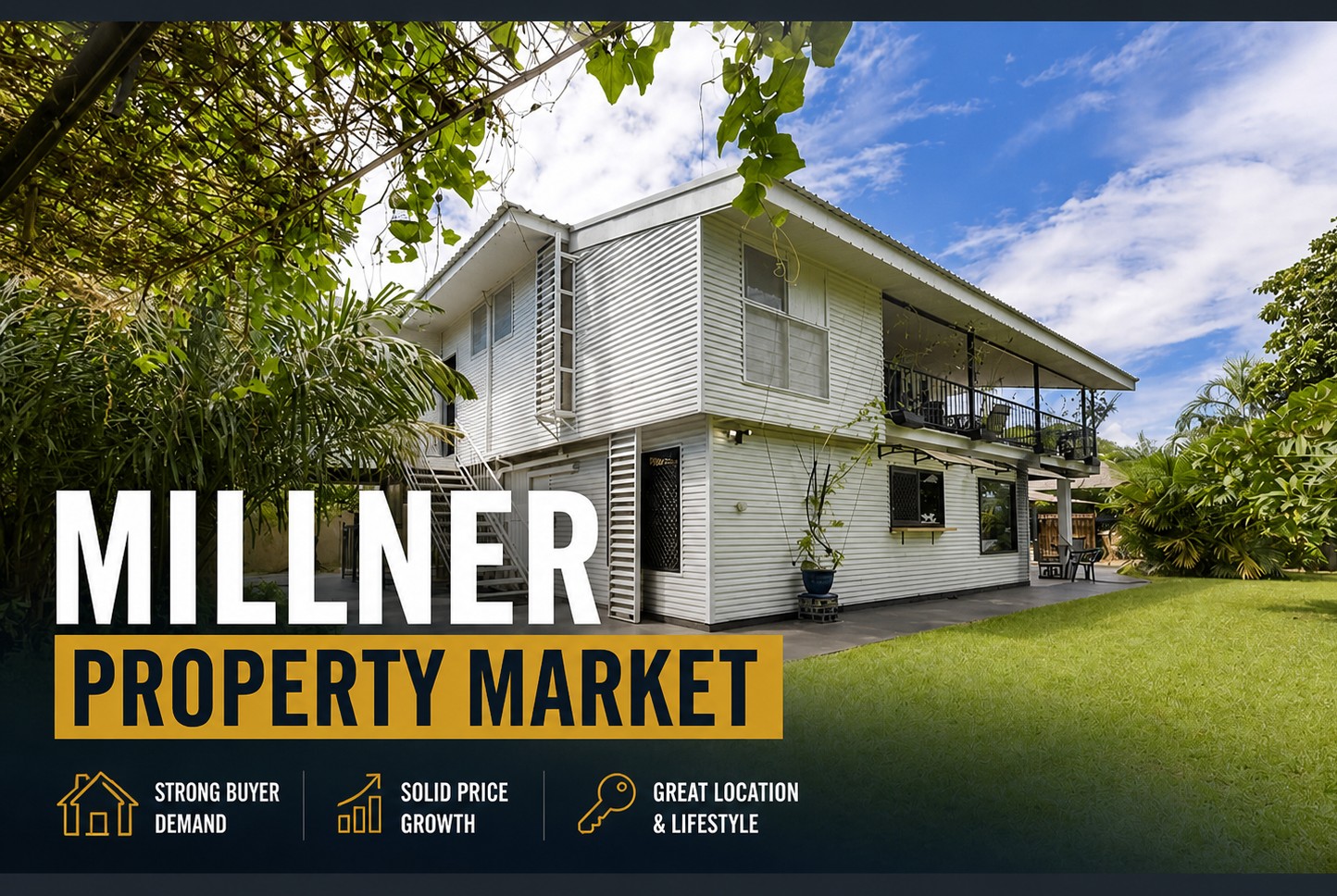
Millner’s 2026 property market is supported by Darwin’s strong broader housing growth, tight rental supply and local rental demand. Public data shows Millner houses around $640,000 median value, house rents around $650–$670 per week, and Darwin vacancy at 0.4% in March 2026. For homeowners, the opportunity is real, but final sale price depends heavily on pricing, presentation, launch timing, buyer targeting and negotiation strategy.
Why Millner Matters in Darwin’s 2026 Property Market
Most homeowners think the market alone decides the final sale price.
In reality, the market creates the opportunity — but strategy decides how much of that opportunity you capture.
Millner is an established Darwin northern suburb with a mix of family homes, investment properties, units and practical residential blocks. It sits close to key lifestyle and employment areas including Nightcliff, Rapid Creek, Coconut Grove, Casuarina, Marrara and Darwin Airport. That location gives Millner a strong local story for both owner-occupiers and investors.
Darwin’s broader market has strengthened significantly. PropTrack reported Darwin’s average home price reached a record $615,000 in April 2026, up 16.9% over 12 months, with Darwin houses averaging about $702,000 and units around $461,000. Cotality also reported Darwin dwelling values at $618,596 in March 2026, with 19.7% annual growth.
For Millner homeowners, this creates a positive backdrop. But it does not mean every property will sell automatically for a premium. Buyers are still comparing value, condition, presentation, land size, rental return, body corporate costs and future maintenance risk.
That is why selling well in Millner requires more than just uploading the home online.
It requires a proper launch strategy.
Key Takeaways
Millner’s median house price is reported around $640,000, with 19.63% annual capital growth and 34 house sales over the past 12 months.
Realestate.com.au reports Millner median house rent around $670 per week, based on rental listings over the past 12 months, with rental demand increasing.
For 3-bedroom houses, Realestate.com.au reports median rent around $650 per week, while units show median rent around $550 per week, with unit rents up 14.6% over the reported period.
Darwin vacancy fell to 0.4% in March 2026, according to SQM Research, showing very tight rental supply across the city.
The broader Darwin market remains strong, with PropTrack reporting 16.9% annual home price growth and Cotality reporting 19.7% annual dwelling value growth.
Millner Market Snapshot 2026
Public data varies slightly depending on the source, timing and sample size. That is normal for suburb-level property data, especially in smaller Darwin suburbs where a handful of sales can move the median.
Millner House Market
Median house price guide: around $640,000
Annual house growth: around 19.63%
House sales: 34 sales over the past 12 months
Average days on market for houses: around 34 days
Median house rent: around $650–$670 per week
Your Investment Property reports Millner’s median house price at $640,000 and average days on market for houses at 34 days. Realestate.com.au reports median house rent around $670 per week, with 3-bedroom houses around $650 per week.
Millner Unit Market
Median unit price guide: around $340,000
Annual unit growth: around 8.80%
Unit sales: 48 sales over the past 12 months
Average days on market for units: around 50 days
Median unit rent: around $550 per week
Your Investment Property reports Millner’s median unit price at $340,000 with 8.80% annual growth and 48 unit sales over the past 12 months. Realestate.com.au reports Millner unit rent around $550 per week, with unit rents up 14.6% over the reported period.
Why Buyers Are Looking at Millner
Millner has a practical value story.
It is not just about one number. Buyers are looking at the overall package:
Location
Land size
Rental demand
House condition
Affordability compared with nearby suburbs
Access to schools, shops and employment hubs
Proximity to Nightcliff, Rapid Creek, Casuarina and Darwin Airport
Potential for owner-occupiers and investors
For investors, the rental story matters. Darwin’s vacancy rate fell to 0.4% in March 2026, and Millner house rents are reported around $650–$670 per week.
For owner-occupiers, the focus is different. They are asking:
Is the home liveable?
Is the layout practical?
Is the yard usable?
Is the location convenient?
Will the property need expensive repairs soon?
Is the asking price fair compared with nearby suburbs?
This is where presentation and buyer confidence become extremely important.
Buyer Behaviour in 2026: Demand Is Active, But Buyers Are Sharper
Darwin buyers are not just walking into open homes blindly.
They are checking suburb medians, rental returns, comparable sales, building condition, online photos, days on market and future maintenance risks.
In older established suburbs like Millner, this matters.
A clean, well-presented property can create confidence quickly. A cluttered, tired or poorly priced property can create doubt before a buyer even walks through the door.
Buyers are especially sensitive to:
Roof condition
Air-conditioning
Electrical and plumbing condition
Termite risk
Moisture or water damage
Unapproved structures
Pool compliance if applicable
Body corporate fees for units
General maintenance costs
So even when the market is strong, sellers still need to reduce buyer uncertainty.
The less uncertainty buyers feel, the more confident they are to compete.
How to Price a Property in Millner Correctly
Pricing is where many sellers either win early or lose momentum.
The biggest mistake is assuming that strong suburb growth means every property should launch high.
A suburb median is only a guide. It is not a valuation.
Two Millner homes can have similar land size and bedroom count but very different value because of:
Renovation level
Street position
Land usability
Parking
Floor plan
Natural light
Air-conditioning
Outdoor living
Maintenance history
Buyer emotional appeal
If you price too high, buyers may not inspect. If the property sits too long, it can feel stale. If you reduce later, buyers may wonder what is wrong.
The strongest campaigns usually launch with evidence, not hope.
Common Pricing Mistakes Millner Sellers Should Avoid
1. Overpricing because the suburb has grown
Millner has shown strong reported annual house growth, but buyers still compare each property individually. A high-growth suburb does not automatically justify an unrealistic asking price.
2. Using online estimates as the only guide
Online estimates can be useful, but they may not account for condition, upgrades, presentation, repairs, street appeal or buyer sentiment.
3. Ignoring active competition
Your home is not only competing with sold properties. It is competing with what buyers can inspect right now.
4. Waiting too long to adjust
If enquiry is low, inspection numbers are weak or buyer feedback is consistent, the strategy should be reviewed early.
5. Spending more on marketing without fixing the strategy
More exposure does not fix poor pricing or poor presentation. Strategy comes first.
Step-by-Step Guide Before Listing Your Millner Property
Step 1: Get a property-specific price update
Start with a realistic price range based on:
Recent Millner sales
Current competing listings
Buyer demand
Property condition
Land size
Renovation level
Rental appeal
Investor yield
Owner-occupier appeal
This gives you a better guide than relying only on suburb medians.
Step 2: Understand your likely buyer
Your Millner property may appeal to:
Families
First-home buyers
Investors
Downsizers
Interstate buyers
Renovators
Owner-occupiers seeking value near Nightcliff and Rapid Creek
Your marketing should speak to the most likely buyer group.
Step 3: Prepare the home properly
Before photography and inspections:
Declutter
Clean thoroughly
Tidy gardens
Remove unnecessary furniture
Improve natural light
Fix small maintenance issues
Touch up paint where needed
Service air-conditioning if required
Remove odours
Improve the entry impression
Small improvements can make the property feel safer, cleaner and easier to buy.
Step 4: Gather important documents
Before going live, prepare:
Title details
Council rates
Body corporate documents if applicable
Rental appraisal if tenanted or investor-focused
Lease agreement if tenanted
Invoices for recent works
Approvals or permits where available
Building reports if already completed
Smoke alarm compliance details
Pool compliance information if applicable
The more prepared you are, the smoother the buyer process becomes.
Step 5: Choose the right selling method
For Millner, possible strategies include:
On-market campaign
Off-market campaign
Hybrid strategy
Private treaty
Deadline sale
Investor-focused campaign
Owner-occupier launch
Pre-market buyer testing
The right method depends on your goal, timeline and property type.
Step 6: Launch with strong photos and positioning
Your first week online matters.
Buyers often decide within seconds whether to click or keep scrolling. Your headline, main photo, price guide, description and campaign message need to make the property easy to understand and attractive.
Step 7: Manage enquiries fast
Fast follow-up can be the difference between a buyer inspecting your home or moving to the next listing.
A good campaign should track:
Who enquired
Who inspected
Who requested contracts
Who asked about finance
Who returned for a second look
Who showed urgency
Who gave objections
Who may still be negotiable
Step 8: Review campaign performance early
Do not wait too long.
Review:
Online views
Enquiries
Inspection numbers
Buyer feedback
Offer activity
Competing listings
Price feedback
Days on market
If the market is responding, push harder. If it is not, adjust quickly.
What to Do After Listing Your Millner Property
Once the property is live, the work is not finished.
The campaign must be managed actively.
Monitor buyer feedback
Common buyer feedback may include:
Price concerns
Condition concerns
Maintenance worries
Layout objections
Rental yield questions
Comparison with another property
Finance uncertainty
Settlement timing concerns
Good feedback helps shape negotiation.
Keep presentation consistent
Every inspection matters. Keep the property clean, bright, fresh and inspection-ready.
Create urgency without pressure
Serious buyers should know:
How much interest there is
When offers are expected
What the seller is looking for
Whether settlement terms matter
Whether other buyers are circling
Negotiate beyond price
The best offer is not always the highest offer.
Consider:
Deposit
Finance condition
Building and pest condition
Settlement date
Buyer motivation
Risk of falling over
Flexibility
Special conditions
A slightly lower clean offer may sometimes be stronger than a higher risky offer.
Keep the contract process moving
Once an offer is accepted, keep communication clear between buyer, seller, agent, conveyancer, broker and inspectors.
Delays can create uncertainty.
Do You Need Expensive Marketing to Sell in Millner?
Not always.
A large marketing budget does not automatically create a better result.
In many cases, sellers achieve better outcomes by focusing on:
Correct pricing
Strong presentation
Professional photography
Clear property positioning
Targeted buyer follow-up
Local buyer database
Investor targeting
Negotiation strategy
Premium marketing can help when the property needs wider reach, but marketing spend should support the strategy — not replace it.
The better question is:
What is the smartest way to create competition for this specific property?
Is Millner Better for Investors or Owner-Occupiers?
Millner can appeal to both.
Investors may like:
Strong rents
Tight vacancy
Established tenant demand
Relative affordability
Unit and house options
Proximity to employment and lifestyle hubs
Owner-occupiers may like:
Established homes
Practical blocks
Northern suburbs location
Access to nearby shops and schools
Proximity to Nightcliff and Rapid Creek
Value compared with premium coastal pockets
Because Millner can attract multiple buyer types, sellers should not rely on one narrow campaign. The best strategy is to position the property based on its strongest buyer appeal.
👉 Also Read:
Sell My House Darwin: https://atrealtydarwin.com/darwin-property-insights/b/sell-my-house-darwin-2026-guide
Local Insight from Khem Gurung
As a Darwin-based real estate agent working across Darwin and Palmerston, I see how differently properties perform depending on how they enter the market.
In established suburbs like Millner, sellers often assume strong rental demand and suburb growth will do all the work.
But demand only creates the opportunity.
Strategy converts that opportunity into a result.
A well-presented, well-priced Millner home can attract strong interest because buyers understand the location and rental fundamentals. But if the property launches too high, looks poorly presented, or lacks a clear buyer strategy, it can lose momentum quickly.
My advice to Millner homeowners is simple:
Do not just list.
Launch properly.
Price with evidence.
Present with purpose.
Negotiate with strategy.

Transparency Note
This article is a general market guide only. It is not a formal property appraisal, financial advice or legal advice.
Millner property values can vary depending on land size, improvements, location within the suburb, renovation level, tenancy, market timing, buyer demand, building condition and contract terms.
For a property-specific estimate, homeowners should request a current appraisal and speak with relevant financial or legal professionals.
👉 Also Read:
Moil Property Market 2026 : https://atrealtydarwin.com/darwin-property-insights/b/moil-property-market-report-darwin-2026
About the Author
Khem Gurung is a Darwin-based real estate agent with @realty, working across Darwin, Palmerston and surrounding suburbs. Khem focuses on strategic property sales, buyer positioning, transparent communication and practical campaign execution designed to help sellers make smarter decisions, reduce unnecessary costs and protect more of their equity.
FAQs About Millner Property Market 2026
1. Is Millner a good suburb to invest in 2026?
Millner can appeal to investors because it has established housing, strong reported rents and access to Darwin’s tight rental market. SQM Research reported Darwin vacancy at 0.4% in March 2026, which supports investor attention across well-located suburbs.
2. What is the current median house price in Millner?
Your Investment Property reports Millner’s median house price at $640,000, with annual capital growth of 19.63% and 34 house sales over the past 12 months. This is a suburb-level guide only, not a property-specific appraisal.
3. What is the median rent in Millner?
Realestate.com.au reports Millner median house rent around $670 per week, while 3-bedroom houses are reported around $650 per week. Rental performance can vary based on size, condition, location, parking and presentation.
4. Are units in Millner performing well?
Your Investment Property reports Millner’s median unit price at $340,000 with 8.80% annual growth and 48 unit sales over the past 12 months. Realestate.com.au also reports unit rents around $550 per week, with unit rents up 14.6% over the reported period.
5. Is Darwin’s property market still strong in 2026?
Yes. PropTrack reported Darwin’s average home price reached a record $615,000 in April 2026, up 16.9% over 12 months. Cotality also reported Darwin dwelling values at $618,596 in March 2026, up 19.7% annually.
6. How long does it take to sell a house in Millner?
Your Investment Property reports Millner houses spend around 34 days on market on average. Actual selling time depends on price, presentation, property condition, buyer demand and campaign strategy.
7. Should I renovate before selling in Millner?
Not always. Light improvements such as cleaning, decluttering, garden tidy-up, minor repairs and paint touch-ups can often help more than expensive renovations. The goal is to improve buyer confidence without overcapitalising.
H3: 8. Do I need expensive marketing to sell in Millner?
Not necessarily. Strong pricing, good presentation, professional photos and targeted buyer follow-up can often matter more than simply spending more on advertising. The right marketing budget depends on the property and buyer pool.
9. What is the biggest mistake Millner sellers make?
The biggest mistake is usually overpricing. If the property launches too high, buyers may ignore it early, and the listing can lose momentum before serious offers appear.
10. What type of buyers look in Millner?
Millner can attract families, first-home buyers, investors, downsizers and buyers looking for value near Darwin’s northern suburbs. Investor interest may be supported by strong rents and Darwin’s tight rental supply.
11. How can I maximise my sale price in Millner?
Start with a realistic price, prepare the property properly, launch with strong presentation, target the right buyers and negotiate beyond just price. In Darwin’s smaller market, momentum and confidence are critical.
12. Should I sell my Millner property now or wait?
That depends on your property, personal goals and next move. Current Darwin market conditions are supportive, but the best time to sell is when your property is prepared, priced correctly and supported by a clear strategy.
Thinking of selling in Millner, Darwin or Palmerston?
Before you make a decision, get a clear property-specific strategy.
Khem Gurung
Darwin Real Estate Agent
@realty
0451 096 881
Website: https://atrealtydarwin.com/khemgurung